← Previous
AI/ML Operations
Next →
Logistic Regression for Classification: Concept, Sigmoid Function, Cost Function, and Implementation
📈 Polynomial Regression
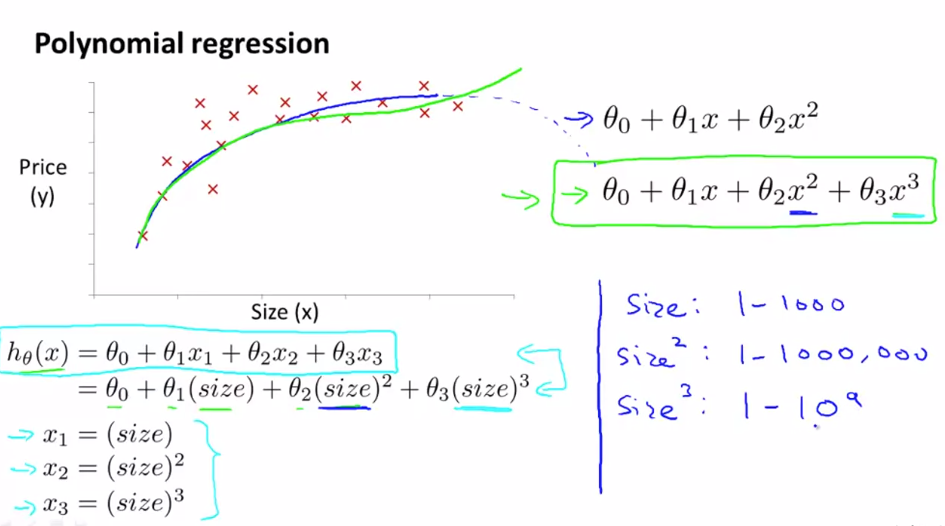
Polynomial regression is an extension of linear regression where we model a nonlinear relationship between input and output by adding powers of .
Sometimes by defining a new feature you might get a better Model that requires less computation
Use case:
When prediction fits Polynomial equation instead of linear equation
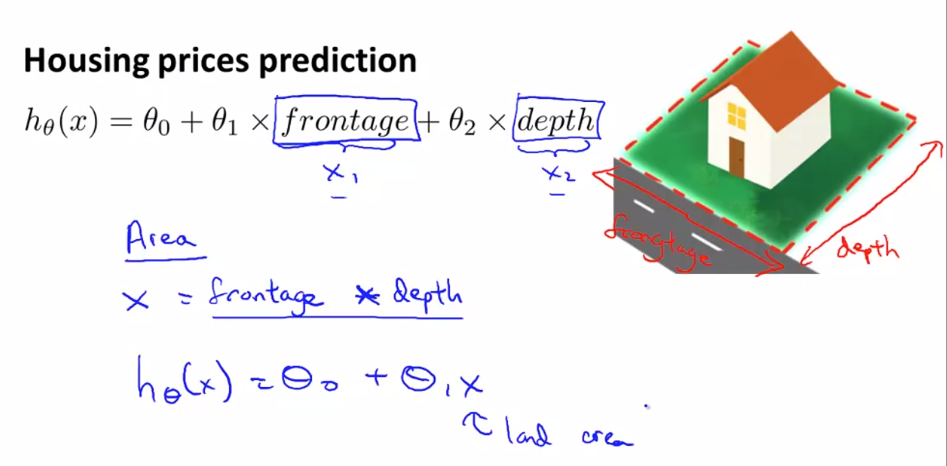
For example house price can defined by calculating area instead of creating 2 variable equation we can define one variable equation :
- Scaling of feature becomes crucial in Polynomial Regression
- Some algo can choose feature to fit polynomial curves
- Feature engineering is the process of creating new features from existing ones to improve model performance.
Generic polynomial regression model of degree n: